How to Choose the Best Prefab Cottage from China?
Choosing the best prefab cottage from China requires more than comparing online prices. It demands practical checks, clear specifications, and patience. A cottage may look elegant in photographs, yet its insulation, wiring, and steel connections remain unknown. This guide focuses on the details that affect real performance.
Michelle Kaufmann, a recognized prefab architect, has said, “Prefab is not a style; it is a process.” That idea matters when evaluating Chinese manufacturers. Examine factory experience, production drawings, material samples, and completed projects. Ask for wall thickness, insulation type, roof loading, window specifications, and moisture protection. Do not accept vague promises.
Request independent inspection records when possible. Confirm product testing, quality-control procedures, and documentation for electrical and structural components. Local building requirements still apply after delivery. A reliable supplier should provide technical drawings that your local professionals can review. Shipping also needs careful planning. Check the packed dimensions, container method, unloading equipment, and installation sequence.
I have seen buyers focus too heavily on the lowest quotation. That choice often creates expensive changes later. A cheaper cottage may exclude foundations, plumbing connections, interior finishes, or transport insurance. Read every line.
No supplier is perfect. Some websites contain outdated photographs or unclear specifications. Treat that as a warning, not a minor inconvenience. Compare at least three factories, speak with recent customers, and request a written warranty. A trustworthy manufacturer answers precise questions without pressure. Your final choice should balance design, durability, certification evidence, after-sales support, and total delivered cost. The prettiest prefab cottage is not always the safest investment.
Define Your Cottage’s Purpose, Size, and Site Requirements
Before comparing prefab cottages from China, define how the building will actually be used. A weekend retreat needs different insulation and storage from a year-round home or garden studio. Write down the number of regular occupants, sleeping arrangements, and essential rooms. A compact 20-square-metre cottage may feel comfortable for two people, but cramped once wet coats, luggage, and cooking supplies arrive. Measure the furniture you plan to use. Real dimensions matter.
Then check the site, not just the floor plan. Record the usable ground area, access route, slope, drainage, and nearby trees. A delivery truck may need more turning space than expected. Check local planning and building requirements with the relevant authorities before ordering; rules vary by location and intended use. Ask the supplier for drawings, material specifications, insulation details, and the exact dimensions of packed sections. Confirm what is included in the quoted price, such as foundations, windows, installation, and shipping. These details can change the total cost.
Think about weather at the site. Heavy rain, strong winds, snow, and summer heat affect foundation choices and building specifications. Ask how the proposed design addresses those conditions, and have a qualified local professional review the plans where appropriate. I once assumed a flat-looking plot would need little preparation; a slight slope and poor drainage can complicate installation. That assumption deserves a second look. Keep a written list of requirements, and leave room for practical adjustments.
Compare Prefab Construction Methods and Building Materials
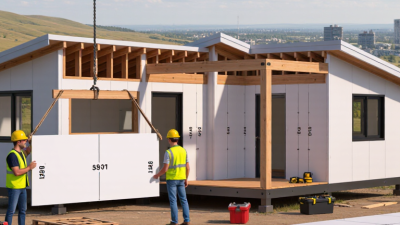
When comparing a prefab cottage from China, compare the construction system before judging its price. Panelized cottages ship as flat wall, roof, and floor sections for assembly on site. They often pack efficiently, but installation depends on accurate foundations and clear drawings. Modular cottages arrive as larger, more finished units. Setup may be quicker, although shipping limits and crane access can add costs. No option is perfect. Ask for a packing list, connection details, and a realistic installation sequence, not only attractive renderings.
Materials shape comfort and maintenance. Light-gauge steel frames resist rot and insects, yet thermal bridges need careful insulation and detailing. Timber frames can simplify repairs, but moisture control and treated components matter. Compare wall insulation by thickness, fire performance, and stated thermal values; a low price alone tells little. Check roof layers, window glazing, fasteners, and interior finishes as one system. A windy coastal site needs different cladding and corrosion protection than a dry inland one. Request specifications and close-up photos of joints. Check what is excluded. Wiring, plumbing, foundation work, and local assembly may cost extra. I might still choose a simpler panel kit over a polished module if the site is hard to reach.
Calculate the Full Cost of Production, Shipping, and Installation
Choosing the best prefab cottage from China requires more than comparing factory prices. Calculate every cost from production to occupancy.
Request a detailed quotation with materials, insulation, windows, wiring, plumbing, packaging, and inland delivery listed separately. McKinsey’s 2019 modular construction report suggests factory building can reduce project costs by up to 20 percent. However, that figure is not guaranteed. Design changes, custom finishes, and small orders can quickly remove the savings.
Start with the production price, then add inspection, export documentation, port handling, ocean freight, insurance, import duties, and destination charges. UNCTAD reports that ships carry over 80 percent of global merchandise trade by volume, but freight rates still change sharply by route and season. A cottage requiring one 40-foot container may also need a second container for furniture or roofing parts. Measure carefully. Space is expensive.
Installation needs its own worksheet. Include land preparation, foundation work, crane hire, local labor, utility connections, permits, taxes, and waste removal. I once treated crane access as a minor detail; the narrow road made it a serious extra charge. Add a contingency of 10 to 15 percent for uncertain items, then compare the delivered and installed cost per usable square meter. A low factory quote can be misleading. Check the assumptions.
How to Choose the Best Prefab Cottage from China? - Calculate the Full Cost of Production, Shipping, and Installation
Indicative landed-cost comparison for a 30 m² single-bedroom prefab cottage manufactured in China. Figures are planning estimates in USD and should be confirmed through supplier quotations, freight bookings, customs authorities, and local contractors.
Cost assumptions: The estimate covers a 30 m² finished cottage, standard insulation, bathroom, basic kitchen fittings, export packaging, ocean freight, cargo insurance, destination port handling, typical import clearance, a basic foundation, and standard installation. It excludes land, utility connections, local permits, sales tax or VAT, site preparation beyond the listed foundation allowance, furniture, appliances, and major ground works. Ocean freight is based on a consolidated or standard containerized shipment and can change with route, season, exchange rates, cargo volume, and destination port conditions.
Review Quality Controls, Warranties, and After-Sales Support
How to Choose the Best Prefab Cottage from China?
Quality control should be visible before the cottage leaves the factory. Ask for inspection records, material specifications, and dated production photographs. A reliable supplier should explain who checks the frame, insulation, windows, plumbing, and electrical systems. Request moisture readings for timber and coating thickness reports for steel components. Details matter.
During a remote factory inspection, look closely at welds, corner joints, sealant lines, and drainage openings. Ask whether each unit receives a water test and electrical safety check. Independent inspection can verify dimensions, packaging, and damage before shipment. It costs more, but replacing a faulty wall overseas costs far more. A perfect inspection is unlikely. Human error remains possible.
Read the warranty like a working document, not a sales promise. Confirm its length, covered components, exclusions, labor responsibilities, and claim procedure. Ask how quickly technical support responds and whether replacement parts can be shipped separately. After-sales support should include installation guidance, repair drawings, and clear communication across time zones. Keep every photo, report, invoice, and message in one file. Promises are not proof. If the supplier avoids specific answers, treat that hesitation as useful evidence.
How to Choose the Best Prefab Cottage from China?
Suggested buyer-assessment weights for comparing quality controls, warranties, and after-sales support. These are a practical scoring framework, not market-wide statistics; adjust them to fit your project.
Ask for documented factory inspections and material specifications, review warranty coverage and exclusions in writing, and confirm how technical support and replacement parts are handled after delivery.


 Your message must be between 20-3,000 characters!