What Are the Best China Pre Built Houses for Global Buyers?
China’s pre built houses are attracting global buyers seeking faster delivery, controlled costs, and repeatable quality. Factory production can reduce weather delays and material waste. McKinsey’s “Modular Construction: From Projects to Products” estimates cost savings of up to 20% and schedule reductions of 20% to 50%. These figures are useful benchmarks, not promises. Results depend on design complexity, shipping distance, installation skills, and local approvals.
The environmental case also deserves careful attention. The United Nations Environment Programme’s 2024 Global Status Report for Buildings and Construction states that buildings consumed about 32% of global energy and produced approximately 34% of global carbon emissions in 2022. Efficient insulation, airtight windows, and low-energy heating can therefore matter more than a stylish exterior. China’s National Bureau of Statistics reported a permanent urbanization rate of 67% in 2024. That large domestic market supports extensive manufacturing experience, but export quality still varies between suppliers. Reality is messier.
A reliable evaluation should examine steel grades, panel thickness, fire resistance, waterproofing, and factory inspection records. Buyers should also check container dimensions, crane access, foundation requirements, and replacement-part availability. A bright showroom tells little about performance after five winters. Ask for completed projects, third-party test reports, and clear warranty terms. Confirm whether the supplier understands the destination country’s structural, electrical, thermal, and plumbing requirements. Some quotes look inexpensive until transport, customs, assembly, and site preparation are added. That is an easy mistake.
This guide compares China pre built houses through practical evidence, supplier transparency, and lifecycle value. It also questions popular assumptions. The cheapest model may not be the most affordable choice. "Fast" may still mean months. Careful verification remains essential.
What Are China Pre-Built Houses and How Do They Work?
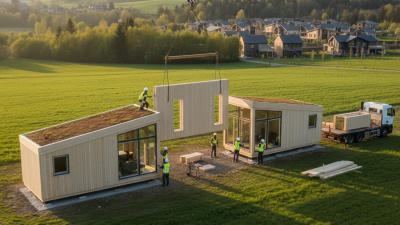
China pre-built houses are manufactured in controlled factory conditions, then transported and assembled on a prepared site. Steel frames, wall panels, roofing, wiring, and plumbing may arrive as completed modules. Workers connect them with bolts, seals, and tested service lines. The process resembles assembling a large, carefully measured kit.
McKinsey’s 2019 report, Modular construction: From projects to products, estimated a potential US and European market of about $130 billion, with possible annual savings near $22 billion. These figures show why global buyers study factory-built housing. Still, savings depend on design repetition, shipping distance, customs procedures, and local labor costs. A lower factory price can disappear inside a complicated foundation or long sea route.
Quality control happens in stages. Inspectors can check welds, moisture barriers, insulation thickness, and electrical testing before loading the container. Buyers should request drawings, material certificates, factory inspection records, and installation instructions. The 2023 Global Status Report for Buildings and Construction reported that buildings and construction created 37% of global energy and process-related emissions. Factory production may reduce waste, but transport and replacement materials still matter. The model is not magic. A factory can repeat mistakes faster. Local engineers must verify wind, snow, earthquake, fire, and thermal requirements before production begins.
Typical Timeline for China Pre-Built Houses Bought by Global Buyers
A China pre-built house is usually designed in advance, manufactured in a factory, shipped to the destination country, and assembled on prepared foundations. The chart shows commonly reported planning benchmarks for a standard modular or prefabricated residential project.
Indicative durations are shown in weeks: design and engineering, factory fabrication, international ocean freight, and on-site assembly. Actual schedules vary according to house size, customization, permits, port congestion, customs clearance, weather, and local construction requirements.
How to Compare Materials, Quality, and Building Standards
For global buyers, the best pre-built house is not always the cheapest or fastest option. Material choice affects durability, insulation, transport weight, and local installation. Light-gauge steel resists termites and offers precise factory production. However, it needs effective corrosion protection, especially near coasts. Timber can provide warmth and lower weight, but it requires careful moisture control. Insulated panels improve energy performance, yet their joints must be sealed correctly.
Quality should be checked beyond polished photographs. Ask for material certificates, factory inspection records, weld or connection details, and test results for insulation and fire performance. Confirm that the design considers local wind, snow, seismic, and drainage conditions. Building standards also matter. The supplier should provide structural calculations and documents suitable for review by qualified professionals in the destination country. A small sample wall can reveal more than a long sales presentation.
Tips: Request an independent inspection before shipment. Check the delivered materials against the approved list. Examine corners, window seals, floor levels, and plumbing connections after installation. Keep records of every revision. A perfect brochure proves little. I would also allow extra time for local approvals, because imported designs may need adjustment. Some buyers focus too heavily on factory quality and underestimate site workmanship. That is a mistake worth remembering.
What Costs, Shipping, Taxes, and Installation Should Buyers Expect?
For global buyers, the factory price is only the beginning. A pre-built house listed at $40,000 may require another $10,000–$25,000 for packaging, inland transport, ocean freight, and port handling. Costs change with distance, container availability, seasonal rates, and the final delivery address. Ask for a written quotation that clearly states the shipping term, included materials, and insurance coverage.
Taxes need careful checking. Import duty, value-added tax, customs fees, and local inspection charges depend on the destination country. Some authorities classify modular homes as building materials, while others treat them as complete structures. A licensed local customs broker can confirm the correct classification before payment. Do not rely on a general online estimate.
Installation also deserves a realistic budget. The site may need foundations, drainage, electrical connections, plumbing, lifting equipment, and local labor. A crane might be required for a narrow urban lot. A rural site may need a longer utility trench. Local engineers should verify wind, snow, earthquake, fire, and energy requirements. Factory drawings are helpful, but they may not satisfy local approval rules. A low quoted price can still hide expensive corrections. I would keep a 15% contingency, because delays and site changes are common. Some buyers focus too heavily on the house itself. The ground often costs more than expected.
How to Verify Suppliers and Complete an International Purchase
For global buyers, choosing a pre-built house starts with supplier verification, not attractive photos.
Ask for the company’s registration, factory address, production capacity, and recent export records. Request structural drawings, material specifications, energy data, and warranty terms. A reliable supplier should explain these documents clearly. Vague answers deserve caution.
Check whether the design meets your country’s building codes, wind loads, fire rules, insulation standards, and electrical requirements. Local approval may require changes to windows, foundations, or wiring. Use an independent inspector before shipment. Inspect the steel frame, wall panels, doors, plumbing parts, and package labels. Photographs help, but they do not replace physical inspection. Confirm the inspection date in writing.
An international purchase needs a detailed contract. Include dimensions, materials, delivery terms, installation duties, defect procedures, and replacement costs. Define the shipping term carefully, including port charges, customs clearance, and inland transport. Use staged payments linked to measurable milestones. Avoid paying the full balance before inspection. This matters.
I would also verify the bank account through a separate contact channel. Email addresses can be copied. Translation errors can change technical meaning, especially around tolerances and foundation work. A pre-shipment checklist reduces confusion, though it cannot remove every risk. Even experienced buyers may overlook local labor costs or crane access. Leave room for correction. A supplier willing to discuss problems openly is usually more dependable than one promising perfection.


 Your message must be between 20-3,000 characters!