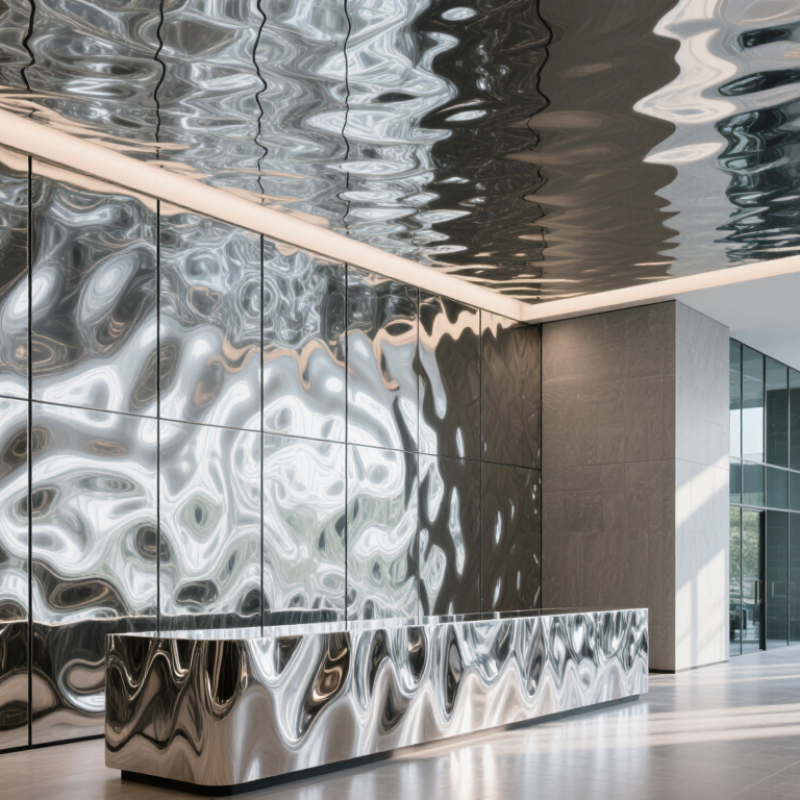
| Living rooms and feature walls | Create a reflective focal point and add visual texture behind seating, a fireplace surround, or a display area. | Choose the ripple depth, panel size, reflectivity, and finish to suit the room’s lighting. Stainless steel and other reflective finishes can show fingerprints and reflected clutter. | Use a flat, stable substrate and the fixing method specified for the panel’s material and weight. Plan seams and edges before installation. | Dust with a soft cloth. Clean with a mild, finish-compatible solution; avoid abrasive pads that can scratch the surface. | Review the panel sample in the room’s actual daylight and artificial lighting before ordering. |
| Retail and display areas | Draw attention to product walls, counters, display niches, or branded environments without relying on printed graphics. | Consider glare, reflections, viewing angles, cleaning frequency, and resistance to everyday contact. Select a finish appropriate to the expected traffic. | Allow access to concealed wiring or services where required. Keep edges and joints aligned with the display layout. | Use a soft, non-abrasive cloth and a cleaner approved for the specific finish. Remove smudges promptly using the panel supplier’s guidance. | Check that lighting does not create distracting reflections for customers or staff. |
| Hotels, restaurants, and reception spaces | Add a decorative surface to lobbies, reception desks, dining areas, or other interior feature zones. | Balance appearance with cleaning demands. For frequently touched areas, compare the durability and repair options of available materials and finishes. | Coordinate panel joints, corner details, and access requirements with adjacent finishes. Confirm the substrate and fixings can support the installed assembly. | Follow a regular dusting and spot-cleaning routine. Avoid harsh chemicals unless the panel’s care instructions specifically allow them. | For public buildings, verify applicable fire, building, and accessibility requirements for the complete installation. |
| Bathrooms and other humid interiors | Provide a decorative accent outside direct spray zones or as part of a system specifically designed for the location. | Check the panel material, backing, edge treatment, and finish for suitability in humid conditions. A decorative panel is not automatically waterproof. | Use compatible fixings and follow the specified sealing and ventilation details. Wet-area waterproofing must be designed independently of the decorative finish. | Wipe away moisture and residue as appropriate. Avoid leaving cleaners or water deposits on the surface; use only finish-compatible products. | Confirm whether the product is approved for the intended exposure, especially near showers, baths, or sinks. |
| Ceilings and overhead features | Create a reflective ceiling accent or a feature above an entry, lobby, or display area. | Consider panel weight, size, reflectivity, viewing angle, and the effect of lighting. Obtain product-specific mass and fixing information. | Use a support system designed for overhead installation and the building structure. Do not rely on adhesive alone unless the panel instructions expressly permit it. | Plan safe access for inspection and cleaning. Follow site procedures for working at height and avoid bending or stressing the panels. | Have the fixing arrangement checked against the panel specification and applicable local requirements. |
| Elevators and narrow corridors | Add visual depth to interior doors, wall sections, or feature panels in compact circulation spaces. | Assess glare, reflection distortion, scratch visibility, and how the finish looks under close viewing. Choose dimensions that limit awkward seams. | Coordinate with door, wall, and hardware systems. Keep required clearances, access panels, and service openings unobstructed. | Clean gently and regularly, particularly on surfaces exposed to hand contact. Use a soft cloth to reduce the risk of fine scratches. | Check local fire and building requirements and confirm that the panel does not interfere with door operation or safety features. |


 Your message must be between 20-3,000 characters!