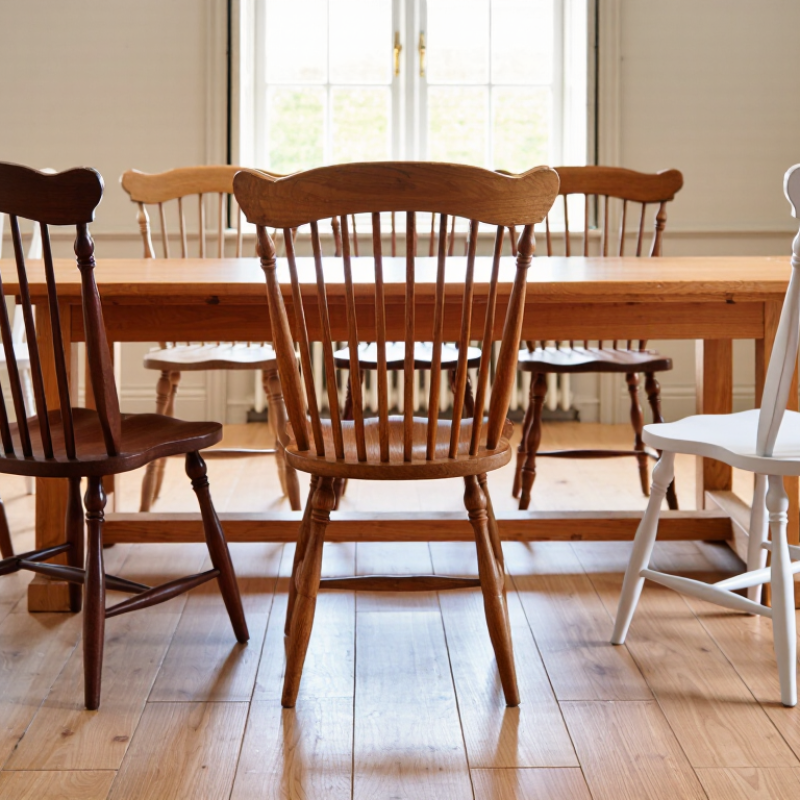
| Comb-Back | A row of upright spindles rises to a broad, horizontal crest rail, creating a comb-like outline. Common in both side chairs and armchairs. | Dining rooms, kitchens, and occasional seating. | The wide crest rail gives the back a clear horizontal emphasis; the arms, when present, are separate from the crest rail. | Homes that need a recognizable traditional Windsor silhouette for everyday seating. |
| Bow-Back | A curved bow-shaped back rail is supported by slender spindles; versions may have arms or be armless. | Dining and general-purpose seating. | The arcing rail creates a rounded outline. The term can overlap with “hoop-back” in furniture descriptions. | Rooms where a softer, curved back profile works better than a wide, straight crest rail. |
| Fan-Back | Spindles spread upward in a radiating pattern beneath an arched crest rail. | Dining rooms, parlors, and decorative seating. | The fan-like arrangement of the back spindles is its defining visual feature. | Interiors that call for a more open, ornamental back design. |
| Sack-Back | A tall, curved back typically combines a broad upper rail with radiating spindles; many examples have arms. | Living rooms, parlors, and dining spaces. | Its higher, fuller back gives it a more substantial profile than many compact Windsor forms. | People who want a traditional armchair with a prominent back. |
| Continuous-Arm | A single bent rail sweeps up from one side, across the back, and down to form the opposite arm, with spindles beneath it. | Dining, reading, and general-purpose armchair seating. | The continuous rail unites the arms and back in one flowing outline. | Rooms that need an armchair with a distinctive, uninterrupted curved profile. |
| Loop-Back | A rounded, loop-shaped back rail frames vertical spindles; some versions include arms. | Dining areas and occasional seating. | The back rail forms a clear loop around the upper back. Depending on the maker or period, this form may also be described as a bow- or hoop-back. | Spaces that suit a compact, rounded back silhouette. |
| Low-Back | A shorter backrest, usually made with a reduced-height rail and a smaller group of spindles. | Dining rooms, kitchens, and rooms with limited visual space. | The reduced back height creates a less imposing profile; the exact rail shape can vary. | Smaller rooms or layouts where a high chair back would interrupt sightlines. |
| Writing-Arm | An armchair form fitted with a small writing tablet, traditionally positioned to one side. | Writing, reading, or occasional desk use. | The attached tablet distinguishes it from a standard Windsor armchair; tablet placement and shape vary. | Study corners or multipurpose rooms where a compact writing surface is useful. |
| Windsor Rocker | A Windsor-style seat and spindle back mounted on curved rockers; the back and arms can follow several Windsor patterns. | Relaxed seating in living rooms, bedrooms, and covered porches. | The rocker base is the defining feature, rather than one particular back shape. | People who want gentle rocking motion and a traditional turned-leg chair profile. |
| Child’s Windsor | A smaller-scale Windsor chair with a solid seat, turned legs, and a spindle back; the back design can vary. | Children’s rooms, supervised activities, and small-scale display. | It is distinguished by its reduced proportions, not by one specific back pattern. | Spaces needing a child-sized traditional chair; check seat height and stability for the intended age. |


 Your message must be between 20-3,000 characters!