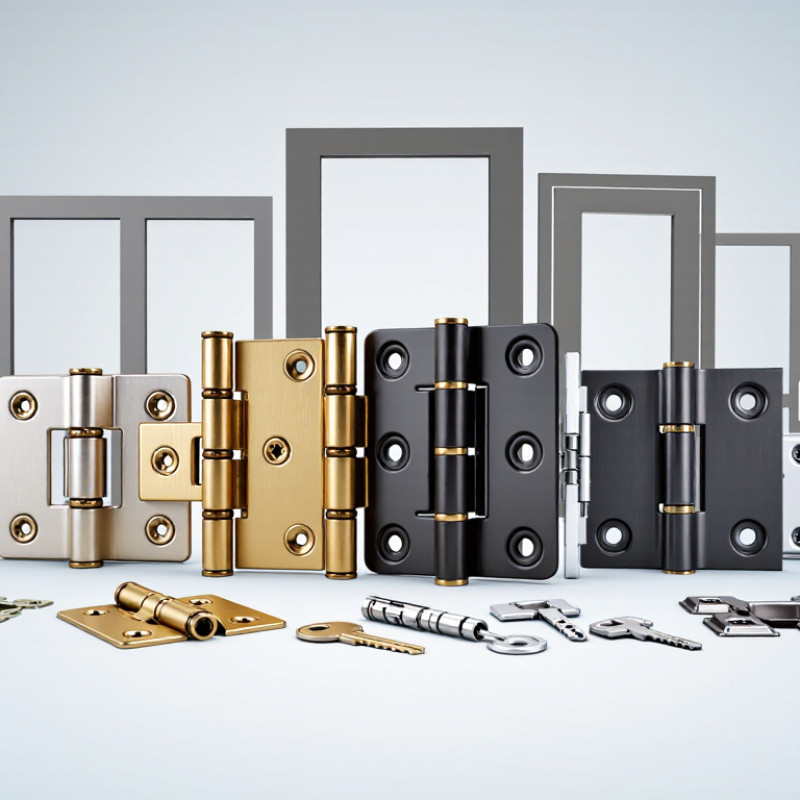
| 1. Flag hinge | A common surface-mounted uPVC door hinge with a flag-shaped leaf. Often used on residential entrance and back doors. | Many modern versions provide lateral, height, and compression adjustment; the available directions vary by model. | Match the hinge profile, fixing pattern, handing if applicable, and door-to-frame clearance. Use the maker’s adjustment instructions. | Check fixings and seals periodically. Lubricate designated moving points with a suitable product if the manufacturer recommends it. |
| 2. Butt hinge | Two leaves joined by a knuckle and pin. Used on some uPVC doors, especially designs with compatible prepared hinge positions. | Basic butt hinges are usually fixed-position; adjustable models may offer limited alignment changes. | Confirm that the door and frame are designed for the hinge and its fixing method. Do not assume a standard butt hinge fits every uPVC profile. | Keep the pin and knuckle clean. Check for looseness, wear, or corrosion and replace damaged hinges with compatible parts. |
| 3. Rebated hinge | Designed to accommodate a rebated door edge, where the door overlaps or steps against the frame when closed. | Adjustment depends on the design; some models offer compression or lateral adjustment, while others have little or none. | Measure the rebate and check the hinge’s profile and fixing positions. A mismatched hinge can affect closing and weather-seal contact. | Keep the rebate and hinge area free of dirt. Check that the door closes without binding and that the seals are not excessively compressed. |
| 4. 3D-adjustable hinge | A hinge category with adjustment in three directions, commonly used to align a door within its frame after installation or as the door settles. | Typically allows height, lateral position, and compression adjustment, though the mechanism and range differ by model. | Identify each adjustment screw and its permitted range before turning it. Adjust in small, balanced increments and support the door as needed. | Recheck locking, closing, and seal contact after adjustment. Avoid forcing screws or exceeding the specified adjustment range. |
| 5. Slimline hinge | A lower-profile hinge intended for doors where a compact appearance or limited hinge-side clearance is important. | Some slimline models are adjustable; others have limited or no adjustment. Check the specific product details. | Compare dimensions and fixing centres carefully. Confirm that the hinge is rated for the door and compatible with the frame profile. | Inspect for movement or rubbing, particularly if clearances are tight. Keep the hinge area clean and follow the product’s lubrication guidance. |
| 6. Concealed hinge | Fitted within the door and frame so the hinge is largely hidden when the door is closed. Used where a concealed appearance is desired. | Adjustment options vary; some systems permit alignment changes in multiple directions. | Requires a compatible door and frame preparation. Check clearances, permitted door dimensions, and installation instructions before purchase. | Keep accessible moving parts clean and check alignment if the door begins to bind. Use only the service method specified for the hinge. |
| 7. Lift-off hinge | Allows a compatible door to be lifted off its hinge pins when open. May be useful where door removal is occasionally required. | Often has limited adjustment; some designs provide additional alignment features. | Check whether the hinge is handed and whether the door can be safely lifted clear. Confirm suitability for the door’s weight and use. | Ensure the door is supported during removal or refitting. Inspect the pin and retaining features for wear or damage. |
| 8. Security hinge | A hinge incorporating security features, such as protected fixings or components intended to resist removal when the door is closed. | Adjustment depends on the hinge design; security features do not necessarily mean the hinge is adjustable. | Check the hinge’s compatibility with the door system and ensure all specified fixings and security components are fitted correctly. | Do not remove or modify security components. Have damaged or loose hardware assessed and replaced with compatible parts. |
| 9. Hinge with dog bolts | A hinge arrangement that may include interlocking security pins, or dog bolts, intended to help resist the door being forced off the hinge side. | The hinge may or may not be adjustable; dog bolts are security features, not adjustment mechanisms. | Confirm that the pins align with their frame-side receivers when the door closes. Correct alignment is important for smooth operation. | Keep receivers free from debris and check alignment after any hinge adjustment. Do not force the door if a pin does not engage correctly. |
| 10. Non-adjustable fixed hinge | A fixed-position hinge without built-in alignment adjustment. Found on some door systems and replacement applications. | No built-in adjustment. Door alignment generally depends on correct fitting and compatible components. | Measure the hinge dimensions and fixing positions precisely. If the door is misaligned, check the cause before replacing or repositioning hardware. | Check fixings, wear, and door clearance. Persistent binding or poor sealing may require professional inspection rather than forced adjustment. |


 Your message must be between 20-3,000 characters!