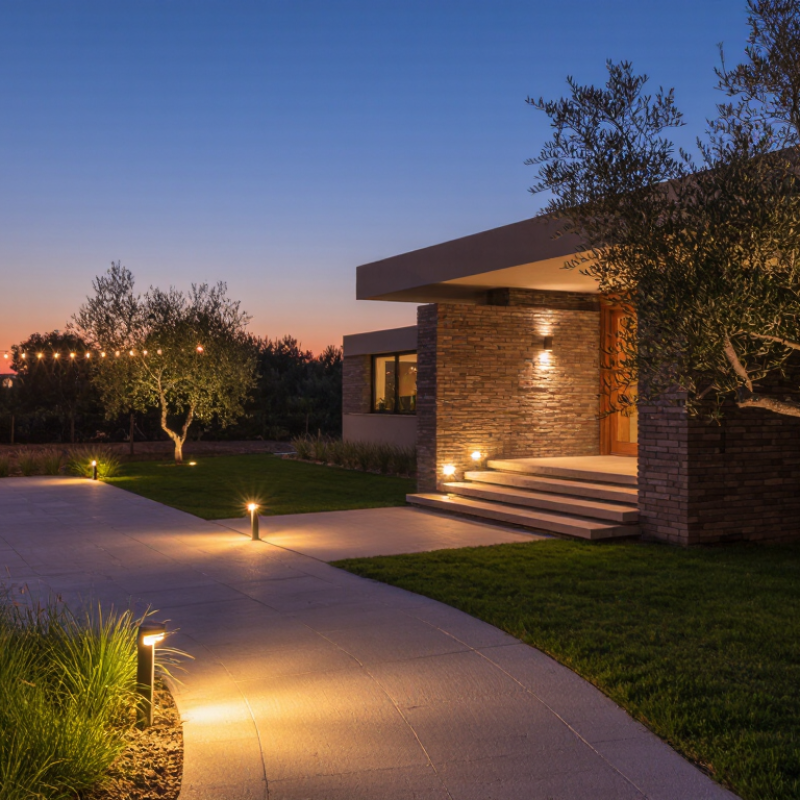
| Path Lights | Illuminate walking routes and help people identify changes in the path. | Garden paths, walkways, and landscape borders | Low-level light directed around the fixture, usually downward or outward. | Position them to avoid dark gaps and glare. Keep fixtures clear of plants that may block the light. |
| Step and Stair Lights | Make steps, level changes, and stair edges easier to see. | Outdoor stairs, retaining walls, decks, and terraces | Focused downward or across the tread surface. | Place light consistently along the route so each step is visible without shining directly into people’s eyes. |
| Wall Lights and Sconces | Provide practical illumination near entrances and along exterior walls. | Entryways, garages, porches, and patios | Downward, upward, or bidirectional, depending on the fixture design. | Choose a suitable height and shielded design to limit glare. Use outdoor-rated fixtures appropriate to their exposure. |
| Floodlights | Illuminate broad areas for visibility, security, or general outdoor use. | Driveways, yards, building exteriors, and work areas | Wide beam spread, often adjustable. | Aim carefully to avoid lighting neighboring properties or shining into windows. Motion sensors can reduce unnecessary operating time. |
| Spotlights and Uplights | Highlight specific landscape or architectural features. | Trees, garden features, columns, and textured walls | Narrow or moderate beam aimed at a selected feature; uplights direct light upward. | Use restrained output and aim precisely to limit glare and unwanted light spill. |
| Post and Bollard Lights | Provide low-level area lighting and help define routes or outdoor boundaries. | Driveways, paths, garden edges, and open areas | Usually distributes light outward and downward from a raised fixture. | Space fixtures to provide reasonably even coverage, and select a height that suits the area and intended use. |
| Deck and Patio Lights | Support visibility and comfortable use of outdoor living spaces. | Decks, railings, seating areas, and patios | Localized light from recessed, surface-mounted, or railing-mounted fixtures. | Combine task lighting with softer ambient light. Select fixtures designed for the location’s exposure to moisture and weather. |
| In-Ground Lights | Mark routes or illuminate nearby landscape and architectural details. | Path edges, paving, driveways, and landscape beds | Light is directed upward or across the ground from a flush-mounted fixture. | Use fixtures rated for installation conditions and expected loads. Keep lenses clean and avoid placing them where water collects. |
| String Lights | Create decorative, ambient lighting for social areas. | Patios, pergolas, balconies, and outdoor dining spaces | Soft, distributed light from a line of lamps. | Secure the cable appropriately and use products rated for outdoor conditions. Avoid placing lights where they obstruct movement. |
| Security Lights | Improve visibility around access points and selected exterior areas. | Entrances, side passages, garages, and yards | Often broad and directed toward a target area; may use motion or dusk-to-dawn controls. | Set sensors and aiming to reduce false activation and light trespass. Lighting supports visibility but does not replace other security measures. |


 Your message must be between 20-3,000 characters!