logo

Top 10 Stackable Battery Storage Factories for Global Buyers

Choosing a battery supplier is more than comparing prices or advertised capacity. For global buyers, a dependable stackable battery storage factory should demonstrate how its modules, battery management system, and safety controls work together. Clear product documentation matters. So does a realistic warranty.

Stackable systems can expand as energy needs change, from a small backup installation to a larger commercial setup. Yet the details vary. Buyers should check usable capacity, inverter compatibility, operating conditions, certifications, and support arrangements before comparing quotations. Ask how the factory tests finished units. A specific answer is more useful than a broad promise.

This guide introduces ten manufacturers and factories serving the global market. It considers product range, manufacturing experience, technical information, quality practices, and buyer support where reliable details are available. These factors offer a practical starting point, not a universal ranking. Details matter.

Factory capabilities can also be difficult to compare. Some suppliers manufacture battery packs, while others provide system integration or outsource key components. That distinction deserves attention. Before placing an order, request current datasheets, sample test records, warranty terms, and clear information about production and after-sales service. Verify important claims directly with the supplier. No shortlist can replace that step. Even a well-presented factory profile may leave questions unanswered, so buyers should treat this overview as a guide for further evaluation, not a guarantee of performance.

Top 10 Stackable Battery Storage Factories for Global Buyers

What Stackable Battery Storage Systems Are and How They Work

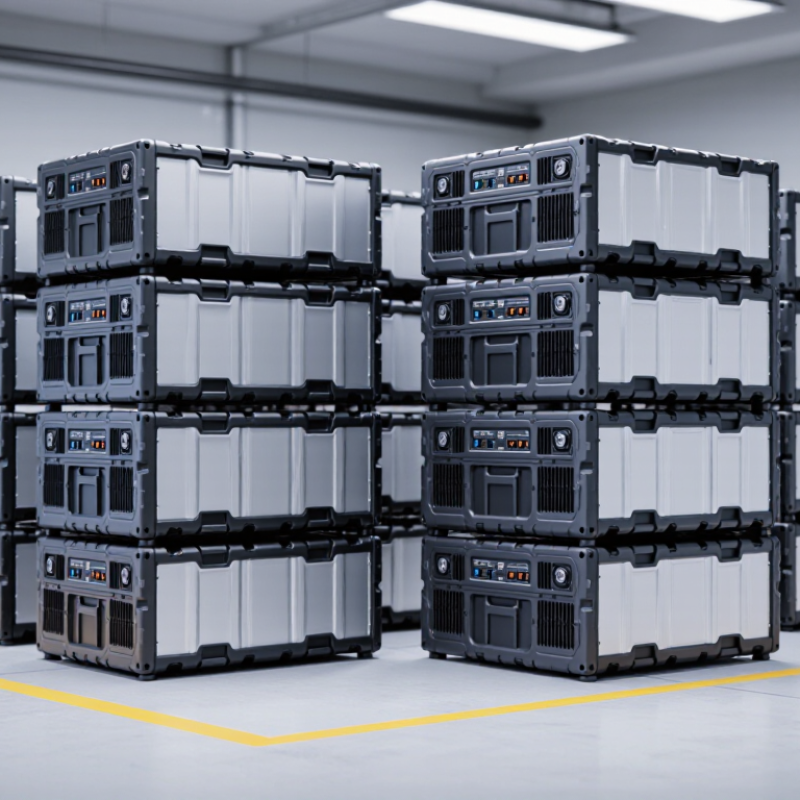
Stackable battery storage systems are built from separate battery modules that connect to form a larger energy store. A homeowner or installer can add modules as demand grows, provided the system’s design allows expansion. The cabinet may look like a neat tower. The wiring matters more.

Inside each module, battery cells store energy as direct current. A battery management system monitors conditions such as cell voltage, current, and temperature. It can limit charging or discharging when readings move beyond permitted operating ranges. Several modules connect through designed electrical links, while a compatible inverter converts stored direct current into alternating current for household or commercial loads. Some systems also communicate with solar equipment or a monitoring screen.

Capacity and power are different. Capacity describes how much energy the system can store; power describes how quickly it can deliver it. A taller stack may increase capacity, but it does not automatically raise the inverter’s output. That detail is easy to overlook. In real installations, cable routing, ventilation, floor strength, and access for maintenance all matter. I would not assume every module can be mixed or added later; compatibility depends on the system’s specifications. The physical stack is simple to picture, but the controls and installation choices deserve careful attention.

Stackable Battery Storage: How Capacity Scales

Stackable systems expand by connecting compatible battery modules. This illustrative chart uses a 51.2 V, 100 Ah module: nominal energy is calculated as voltage × capacity, or 5.12 kWh per module. Actual usable energy and permitted module counts depend on the system.

Nominal energy shown; usable capacity may be lower. Modules should only be combined according to the system manufacturer’s compatibility and installation specifications.

Key Criteria for Comparing Stackable Battery Storage Factories

When comparing stackable battery storage factories, look beyond headline capacity. Check usable energy, cell chemistry, cycle-life test conditions, and operating temperature. A cycle-life figure means little without its depth-of-discharge and temperature assumptions. Confirm the battery management system supports your planned stack size, communication protocol, and inverter pairing. Ask how expansion affects operating limits and warranty coverage. Small details matter.

Factory evidence is as important as the specification sheet. Request sample inspection records, cell-batch traceability, end-of-line test procedures, and reports from recognized independent laboratories. Verify certifications required in your target market instead of relying on a logo in a brochure. Review warranty exclusions, spare-part availability, and the process for handling fault reports. If possible, inspect a production sample or arrange a factory audit. A polished sample may not represent every shipment. That deserves scrutiny.

Tips: Send each supplier the same load profile, peak demand, installation temperature, and expansion plan. Compare written answers side by side. Ask for an actual test report, not only a summary. Leave room for uncertainty; documents can be incomplete, and assumptions should be challenged.

Top 10 Stackable Battery Storage Factories for Global Buyers

For global buyers, comparing the top 10 stackable battery storage factories should begin with verifiable production capability, not polished catalog images. Request cell sourcing information, pack-level test reports, and clear capacity figures for each module. A capable factory should explain how units connect, how its battery management system balances modules, and what happens if one unit becomes unavailable. Details matter. Check enclosure dimensions, terminal placement, labeling, and whether installation guides match the delivered hardware. Small inconsistencies can delay work at a warehouse or project site.

Compare factories on quality controls, documentation, delivery planning, and after-sales support. Ask about cycle-life test conditions, operating temperature, warranty exclusions, spare parts, and typical response times. A quoted lifespan without test conditions is not enough. Request evidence that products have been evaluated for the requirements of the intended market, and confirm that the documents apply to the exact model being purchased. If possible, inspect a sample or arrange an independent factory assessment. A clean audit does not guarantee identical production batches; incoming inspection still matters. The best shortlist is not always the one with the lowest price. It is the one whose claims can be checked.

Top 10 Stackable Battery Storage Factories for Global Buyers

Buyer comparison guide: these are typical specifications and checks found across stackable battery storage products, not rankings or claims about individual factories. Actual values vary by model and test conditions; confirm them in the product datasheet and certification documents.

No. Factory Capability / Product Metric Typical Market Reference What Global Buyers Should Verify
1 Battery chemistry Lithium iron phosphate (LFP) is widely used in stationary storage. Cell chemistry, safety documentation, and whether the stated performance applies to the supplied cells.
2 Low-voltage module rating 48 V-class systems commonly use a nominal battery voltage of 48 V or 51.2 V. Nominal and operating voltage ranges, inverter compatibility, and approved series/parallel configurations.
3 Energy per module Residential stackable modules commonly fall in the approximate 2.5–5.1 kWh range. Usable versus nominal energy, module dimensions, weight, and permitted stack size.
4 Expandable system capacity Residential systems are offered in configurations from several kWh to tens of kWh; limits are model-specific. Maximum modules per stack, parallel-stack limits, and whether expansion requires matching module batches.
5 Cycle-life declaration Some LFP storage products specify 6,000 or more cycles, depending on test conditions. End-of-life capacity threshold, depth of discharge, temperature, charge rate, and warranty conditions.
6 Depth of discharge and usable energy Many systems specify a usable depth of discharge around 90–100%, subject to model settings. Guaranteed usable capacity, reserve settings, and whether the figure changes over the warranty period.
7 Round-trip efficiency Battery-level DC efficiency is often specified in the 90%+ range; system-level results depend on the inverter and operating conditions. Test method and whether the quoted efficiency covers the battery only or the complete system.
8 Operating temperature Permitted charging and discharging temperatures differ; charging below 0°C is commonly restricted unless the system provides suitable protection or heating. Separate charge/discharge limits, low-temperature protection, and any built-in heating feature.
9 Safety and transport documentation Relevant documents may include IEC 62619 for industrial lithium batteries and UN 38.3 test documentation for transport. Current certificates or test reports for the exact battery model and destination market requirements.
10 Quality control and traceability Production records, serial-number traceability, and documented inspection processes are standard due-diligence topics for battery procurement. Factory audit access, cell-batch traceability, incoming and end-of-line test records, and after-sales procedures.

How Leading Factories Differ in Products, Certifications, and Support

A stackable battery factory may offer compact modules, floor-standing towers, or cabinets designed for larger sites. Buyers should compare usable capacity, continuous power, expansion limits, and the battery management system’s communication options. Ask for the installation manual and a sample wiring diagram. Details matter. A connector mismatch can delay commissioning, even when the modules appear compatible. Check whether the stated cycle life includes operating conditions such as temperature, charge rate, and depth of discharge. A headline number alone tells little.

Certifications also need close review. Confirm that documents apply to the exact battery model, inverter pairing, and destination market, rather than a similar product. Request test reports and check their issue dates with the relevant certification body. A factory that explains limits clearly may be more useful than one promising universal compatibility. Not every supplier handles this equally well. Support can differ in response times, remote diagnostics, spare-module availability, and installer training. Ask who answers technical questions after delivery, and what information they need to diagnose a fault. A realistic service process should name response targets and escalation steps. Gaps still happen; written procedures make them easier to spot before a shipment leaves the factory.

How Global Buyers Can Evaluate Suppliers and Plan Procurement

Global buyers evaluating stackable battery storage factories should compare more than quoted prices. Start with usable energy, continuous power, cycle-life test conditions, and module compatibility. Ask suppliers to state temperature limits, protection functions, and what happens if one module fails. Request test reports for the exact configuration, not a similar product. Ask for evidence.

A factory visit or independent audit can show whether incoming cells are traceable and assembly checks are recorded. Compare production capacity with your order size, but verify lead times for cells, inverters, and packaging. Confirm warranty exclusions, spare-part availability, and defect-handling procedures. These details shape the real cost.

A polished presentation does not prove consistent output, and a low price may hide gaps in service or testing. Validate a representative sample before placing a large order.

Tips: Put technical requirements, inspection points, delivery milestones, and document responsibilities in one checklist. Compare offers line by line. Leave time for sample revisions and freight delays; schedules can slip, even with careful planning.