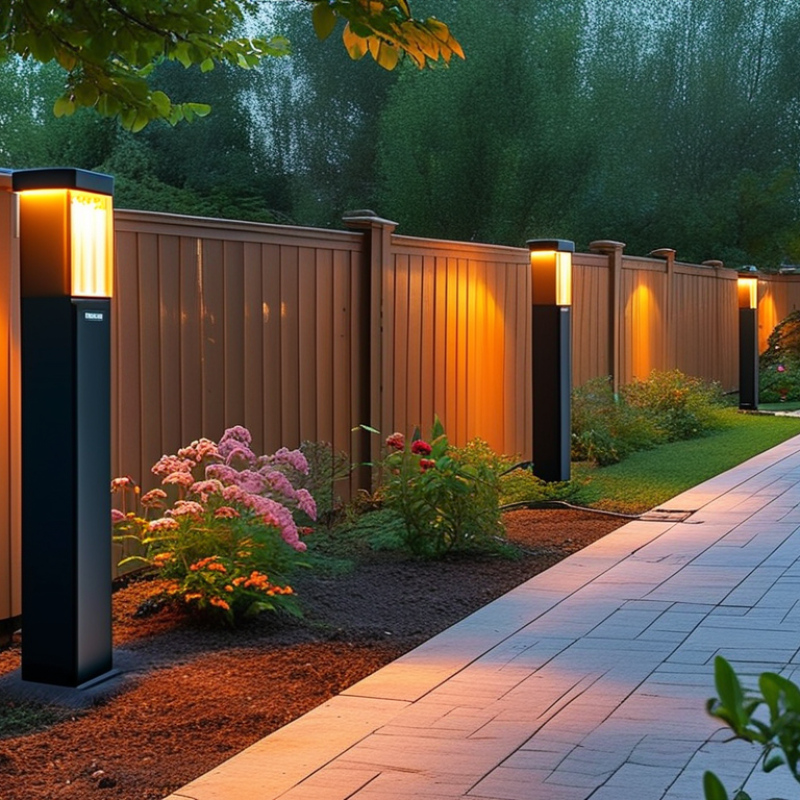
| Typical lamp power used for comparison | 60 W incandescent bulb | 9 W LED bulb providing a comparable general-purpose lighting level | Integrated LED powered by a rechargeable battery | LED technology delivers similar illumination with substantially lower power demand. |
| DOE-reported LED energy advantage | Baseline | LEDs use at least 75% less energy than incandescent lighting for comparable light output | Uses the same LED efficiency advantage, plus solar charging | Lower electricity consumption can reduce operating costs and environmental impact. |
| Grid electricity used during operation | Required | Required | None during normal operation | Solar post lights can operate without trenching or connecting to an outdoor electrical circuit. |
| Estimated annual grid electricity consumption* | 175.2 kWh | 26.3 kWh | 0 kWh from the grid | The LED comparison uses approximately 85% less electricity than the 60 W incandescent example. |
| Illustrative annual electricity cost* | $28.03 | $4.20 | $0.00 for grid electricity | Actual savings depend on local electricity prices, sunlight, usage, and system performance. |
| Installation requirements | Electrical wiring, compatible socket, and replacement bulb | Electrical wiring, compatible socket, and replacement bulb or fixture | Suitable location with adequate direct sunlight; no utility wiring required | Solar installation can be useful for pathways, gardens, driveways, and areas where wiring is difficult. |
| Light activation | Manual switch, timer, or motion sensor | Manual switch, timer, or motion sensor | Typically dusk-to-dawn sensor, timer, or motion sensor | Automatic controls can reduce unnecessary nighttime operation. |
| Dependence on weather and daylight | Low; depends mainly on the electrical supply | Low; depends mainly on the electrical supply | Higher; several cloudy days can reduce battery charge and nighttime runtime | Place the solar panel away from shade and clean it periodically for better charging performance. |
| Maintenance considerations | Frequent bulb replacement and cleaning | Less frequent replacement; periodic cleaning | Panel cleaning and eventual rechargeable battery replacement | Solar lights avoid wiring maintenance but still require battery and panel care. |
| Best use case | Existing wired fixtures where low initial cost is the main priority | Locations requiring dependable, high-duration lighting from the electrical grid | Decorative or pathway lighting where simple installation and off-grid operation are priorities | The best option depends on brightness, reliability, sunlight availability, and installation conditions. |
| *Illustrative calculation assumes one light operating 8 hours per night for 365 nights. Annual cost uses an electricity rate of $0.16 per kWh. Solar figures exclude the energy used to manufacture the product and any backup charging from the grid. |


 Your message must be between 20-3,000 characters!