logo

How to Choose the Best Clip On Study Lamp

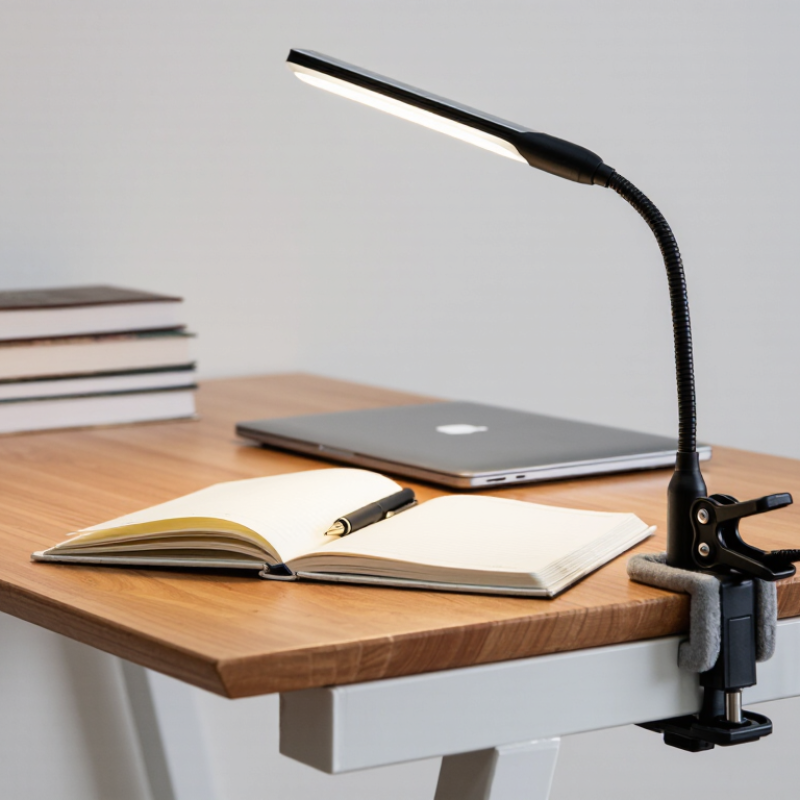
Choosing a Clip On Study Lamp is less about picking the brightest light and more about matching it to your desk, routine, and eyesight. A lamp that works well beside a narrow dorm desk may feel awkward on a thick wooden table. Check the clamp’s opening and padding before buying. A firm grip matters. The lamp should stay put when you adjust its arm, without scratching the surface or wobbling near your books.

Brightness and light direction deserve equal attention. Look for adjustable output, so you can use softer light for evening reading and stronger illumination for detailed notes. A flexible neck helps aim light at the page rather than directly into your eyes. If possible, choose a model with a broad, even beam; a small bright spot can create sharp contrasts across a notebook. Color settings may also be useful, though extra modes are not automatically better. Simple controls can be easier to use during a late study session.

Power options, build quality, and everyday convenience complete the picture. A USB-powered lamp can suit a laptop setup, while a wall adapter may keep your desk less dependent on available ports. Check the cable length and whether the switch is easy to reach. LED models generally use less energy than many older bulb types, but comfort still depends on placement and brightness. Small details add up. No single lamp suits every workspace, and product descriptions can leave out practical drawbacks. Compare dimensions, controls, and return information before deciding. A little measuring now can prevent an irritating fit later.

How to Choose the Best Clip On Study Lamp

Identify Your Study Space and Lighting Needs

Before choosing a clip-on study lamp, look closely at your actual study space. Measure the desk edge and check whether a shelf, monitor, or headboard blocks the clamp. A narrow desk may need a short arm; a deep desk often needs reach and adjustable direction. Notice where your writing hand falls. The lamp should illuminate the page without casting your hand’s shadow across it.

Then match brightness to the task. The IES Lighting Handbook gives task-lighting guidance for reading and writing, with suitable levels depending on the activity and user. Many such tasks fall around 300–500 lux at the work surface. Needs vary, though; glossy paper and bright screens can create glare even when the desk seems well lit. Try the lamp after dusk, and check the page from your usual sitting position. Small detail, big difference.

Think about how long the lamp will run, too. The U.S. Department of Energy’s Energy Saver guidance says LEDs use at least 75% less energy and last up to 25 times longer than incandescent lighting. That can matter during long study sessions. Choose a stable clamp, a shade that keeps the bulb out of your direct line of sight, and controls you can reach without shifting your notes. I sometimes focus too much on brightness; comfort and shadow control matter just as much.

Check Clip Compatibility With Your Desk or Shelf

A clip-on study lamp only fits well when its clamp matches the desk or shelf edge. Measure the edge thickness, including any trim or raised lip, and compare it with the lamp’s stated clamp range. Don’t guess from appearance. A thick-looking desktop may have a thin front lip, while a narrow shelf can still be too deep for the clamp.

Check the space above and below the edge, too. The clamp needs room to open, and its screw or lever must not hit a wall, drawer, or shelf bracket. Look for padded jaws if the surface is painted or veneered; hard plastic can leave marks when tightened firmly. I once overlooked a rounded desk edge, and the lamp slowly tilted during use. Annoying, but useful to learn from. A flat, sturdy contact area matters.

For glass, delicate veneer, or a lightweight shelf, check the furniture maker’s care guidance before clamping anything to it. Avoid forcing a clamp that barely fits. It can strain the edge or slip when the lamp arm moves. If possible, test the clip gently and adjust the lamp head; the base should stay put without needing excessive pressure. Also check that the cord can hang freely instead of pulling the lamp sideways. Small details matter.

How to Choose the Best Clip-On Study Lamp

Check that the lamp clip opens wider than the edge it needs to grip.

How to use this chart: The panel thicknesses are examples, not standard sizes. Measure your desk or shelf at the clamp point, then choose a lamp whose clip opening is at least 2 mm wider. Also check that the clip fits the edge shape and has enough depth to grip securely.

Compare Brightness, Color Temperature, and Glare Control

Brightness should be judged on the page, not by the lamp’s maximum output. EN 12464-1:2021 specifies 500 lux for reading, writing, and data-processing tasks in indoor workplaces. Treat that figure as a useful reference, not a universal home-study target. Measure light at the book, with the lamp in its usual position. A phone app can help compare settings, though it is not a precision instrument. Small changes in distance matter.

Color temperature describes whether light looks warmer or cooler; it does not tell you how bright the lamp is. Compare available settings while reading the same page. Warm light may feel gentle in the evening, while cooler light can make white paper look crisper. Personal comfort varies. That judgment is imperfect. If the lamp offers one fixed tone, check it in your actual room before deciding.

Glare control matters as much as brightness. EN 12464-1:2021 gives a UGR limit of 19 for these workplace tasks, but UGR is a room-lighting metric, not a simple score for a single clip-on lamp. Look for a shade that hides the LED from direct view. Aim the beam across the page, not toward your eyes, and watch for reflections on glossy paper. Test it at night. A clamp that slowly slips can shift the beam and bring glare back.

How to Choose the Best Clip On Study Lamp - Compare Brightness, Color Temperature, and Glare Control

Use these practical targets to compare clip-on study lamps. Illuminance depends on lamp distance, beam shape, and room lighting; check the light on your actual desk rather than relying on wattage alone.

Study Need Suggested Desk Illuminance Useful Color Temperature Color Quality Glare-Control Features Clip and Arm Considerations
General reading and note-taking About 300–500 lux on the work surface 3,000–4,000 K for a neutral-to-warm appearance CRI 80 or higher is a practical minimum for everyday study Choose a shaded or diffused light source; position it so the LEDs are not directly visible A padded clip that fits the desk edge and an adjustable arm help keep the beam over the page
Small print, diagrams, or detailed handwriting About 500–750 lux; increase only if the light remains comfortable 3,500–5,000 K, according to personal preference CRI 80+; higher color rendering can be useful when distinguishing colored materials Look for a broad, even beam and a diffuser that reduces harsh points of light A multi-joint arm makes it easier to bring light closer without placing the lamp in the line of sight
Late-evening study in a dim room Use enough task light to read comfortably, while keeping the surrounding room from being completely dark About 2,700–3,500 K may feel warmer; adjustable color temperature offers flexibility CRI 80+ is suitable for most reading tasks Use dimming to avoid excessive brightness and aim the beam away from eyes and glossy pages Check that the controls are easy to reach and that the arm stays in position after adjustment
Shared desk or limited workspace About 300–500 lux at the intended reading area 3,000–4,000 K is a versatile starting range CRI 80 or higher A directional head helps keep light on your own work area; a shielded design can reduce spill toward others Confirm the clip opening and jaw depth suit the desk, shelf, or bed frame; a stable clamp prevents wobble
Screen-and-paper study setup About 300–500 lux on paper, adjusted to balance with screen brightness 3,000–4,000 K; matching the room’s general lighting can reduce visual contrast CRI 80+ for printed material and colored notes Position the lamp beside or behind the screen, not where it creates reflections on the display A flexible arm and rotating head make it easier to direct light onto paper without shining toward the screen

Assess Adjustability, Power Options, and Ease of Use

A useful clip-on study lamp should move easily without drifting. Look for a head that tilts down over a notebook and swivels toward a screen, plus an arm that reaches across the desk. A firm, padded clamp helps prevent slipping and protects thin shelves. Check its opening against your desk edge; clamp fit is easy to overlook. Small details matter. Try adjusting it with one hand, ideally before buying.

Power affects where the lamp can work. A USB-powered model may suit a desk near a laptop, while a wall-powered model avoids tying up a computer port. Rechargeable lamps offer flexibility, but check charging time and run time at your preferred brightness. The U.S. Department of Energy reports that LEDs use at least 75% less energy and last up to 25 times longer than incandescent lighting. ENERGY STAR lighting criteria also assess efficiency, color quality, and rated life. Choose a warm-to-neutral setting for paper, and make sure brightness controls are easy to reach. Test it first. A touch control can feel neat in a shop, yet awkward when you are trying not to lose your place.

Choose a Durable Lamp With Suitable Safety Features

A durable clip-on study lamp should feel solid without being heavy enough to strain a desk edge. Check the clamp’s grip, hinge, and adjustment joints; loose parts can make the lamp drift while you read. A rubber or padded lining helps protect wood and keeps the clamp from sliding. Try it on a surface similar to your desk, since a narrow shelf may not hold as securely. Small details matter.

Safety deserves more than a quick glance. Look for clear electrical ratings and recognized safety testing information on the product or packaging. The cord should be firmly attached, with no exposed wiring, and long enough to avoid pulling the lamp from its mount. Keep the light source away from paper, curtains, and bedding, and check whether the lamp becomes warm during normal use. LED models often produce less heat than older bulbs, but warmth can still vary. I would also inspect the clamp after moving the lamp; repeated tightening can wear its grip, and it is easy to overlook that. A stable lamp should stay in place with gentle adjustments, not a hard tug.