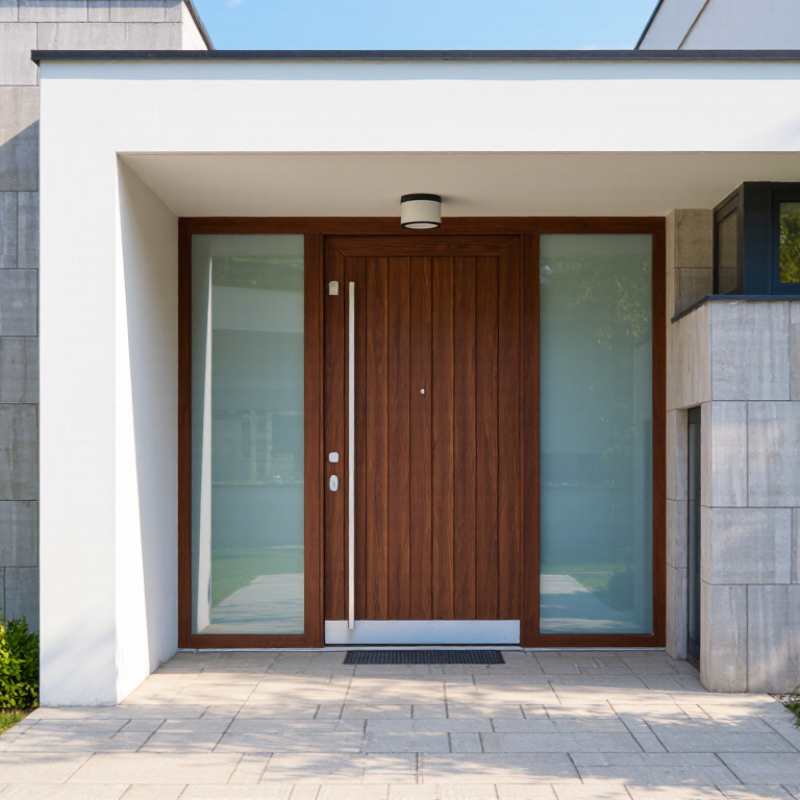
| 1. Measure the opening carefully | Record the opening width and height at several points, along with the wall depth. Check whether the existing frame is square and in good condition. | Confirm the door size and configuration before choosing panel details, glazing, or hardware. | Have the installer verify the opening and finished floor height before ordering. A replacement door may require adjustments if the opening is uneven or damaged. |
| 2. Choose a suitable material | Compare maintenance needs, climate exposure, insulation options, appearance, and budget. Performance varies by construction and product specifications. | Wood offers a natural appearance and may need periodic refinishing. Fiberglass can imitate wood grain and generally needs less routine finish maintenance. Steel doors commonly have a protective painted finish; damaged coatings should be repaired as directed. | Ask how the frame, threshold, and surrounding wall will be protected from moisture. Follow the manufacturer’s care and installation instructions. |
| 3. Match the style to your home | Consider the home’s architectural style, exterior colors, porch, and nearby windows. | Use panel shapes, glazing, and color to complement the façade. Check finish samples outdoors, where daylight can make colors look different. | Confirm that trim, sidelights, and any transom will fit the available space and coordinate with the existing exterior details. |
| 4. Balance privacy and natural light | Decide how much daylight and visibility you want at the entrance. | Clear glass admits light but provides less visual privacy. Textured, patterned, or obscured glazing can limit direct views. Decorative glass should be checked for its stated safety and performance ratings. | Confirm the glazing configuration, orientation, and any local requirements before ordering. Make sure the installation preserves the door’s weather seals. |
| 5. Check energy and weather performance | Look for documented performance information, including insulation value, air leakage, weatherstripping, and glazing details where applicable. | Choose a finish and configuration appropriate for the door’s exposure to sun, rain, and temperature changes. A door’s overall performance also depends on its frame and installation. | Plan for a properly fitted threshold, continuous weatherstripping, and sealed gaps around the frame. Ask the installer how water will be directed away from the opening. |
| 6. Plan security and hardware together | Consider the lockset, deadbolt, hinges, frame, and strike area as parts of one entry system. | Select hardware that suits the door’s style and intended use. Check that the lock and handle are compatible with the door’s thickness and preparation. | Ensure the frame is securely fastened and the latch aligns properly. If adding electronic hardware, confirm power, connectivity, and backup access arrangements. |
| 7. Confirm accessibility and installation details | Consider the door’s swing, clear passage, threshold height, and approach space. Applicable accessibility and building requirements vary by location. | Choose a handle and threshold that are practical for the household and consistent with the home’s appearance. | Agree on who will remove the old door, dispose of debris, protect the work area, and finish interior and exterior trim. Verify local permit requirements and inspect the door’s operation and seals after installation. |


 Your message must be between 20-3,000 characters!