logo

How to Choose a Small Jacuzzi Bath in 2026?

Choosing a Small Jacuzzi Bath in 2026 means balancing comfort, fit, and practical installation—not just choosing the smallest model on display. A compact whirlpool bath can make a tight bathroom feel more restorative, but its outer dimensions do not tell the whole story. Check the internal bathing area, step-over height, pump location, and access panel before deciding. Space matters.

Industry data can help set realistic expectations. Houzz’s 2024 U.S. Bathroom Trends Study reported a median spend of $15,000 for primary bathroom renovations, highlighting how quickly a tub choice can affect a project budget. That figure covers broader renovation work, not the bath alone, so treat it as context rather than a price estimate. Compare installation quotes, electrical requirements, plumbing changes, and delivery costs for your own room. Measure carefully.

For a useful comparison, look for manufacturer specifications and installation guides, then confirm critical details with a qualified bathroom installer. Check the filled weight against your floor structure, and ask how the pump can be serviced after installation. A smaller basin may use less water, yet it can still feel cramped if the seating angle is wrong. And the jets? Their placement, noise, and cleaning routine matter more than a long feature list. In the sections ahead, this guide explains which dimensions, materials, safety features, and running costs deserve attention. Some choices remain personal; a showroom soak can help, but it cannot predict every home’s plumbing or daily routine.

How to Choose a Small Jacuzzi Bath in 2026?

Assess Your Bathroom Space and Bathing Needs

In 2026, start with the room, not the tub’s advertised dimensions. Measure the clear floor area, doorway, and route from the hall. Then mark the tub’s full footprint with tape. Include the faucet, step-in space, and a way to reach the pump for servicing. A tub that fits on paper may still block a drawer or leave no comfortable place to dry off. Small details matter.

Next, be honest about how you bathe. Will one person use it, or do you need room to help a child? Do you want deep soaking, massage jets, or just a quick wash?

A compact whirlpool tub can feel cramped if its interior is narrow, even when its outer dimensions look generous. Check the usable basin depth and shape, not only the product outline. Still, dimensions alone can mislead.

Water and utilities deserve a practical check. The U.S. Environmental Protection Agency’s WaterSense program reports that standard showerheads use 2.5 gallons per minute, while WaterSense-labeled models use no more than 2.0. This is not a bathtub-capacity figure, but it highlights how fixtures affect household water use. Ask a qualified installer to confirm hot-water capacity, floor support, and electrical requirements before choosing a model. Do not guess. A quick site check can prevent an expensive mismatch.

Compare Compact Jacuzzi Bath Sizes and Configurations

How to Choose a Small Jacuzzi Bath in 2026?

Small Jacuzzi baths often range from about 48 to 60 inches long and 30 to 32 inches wide. Exact dimensions vary, so check the product drawing before planning the room. Compare the internal seating area, not just the outer shell. A neat floor plan can still feel cramped once your shoulders meet the tub. Also allow room for the pump, access panel, and safe entry.

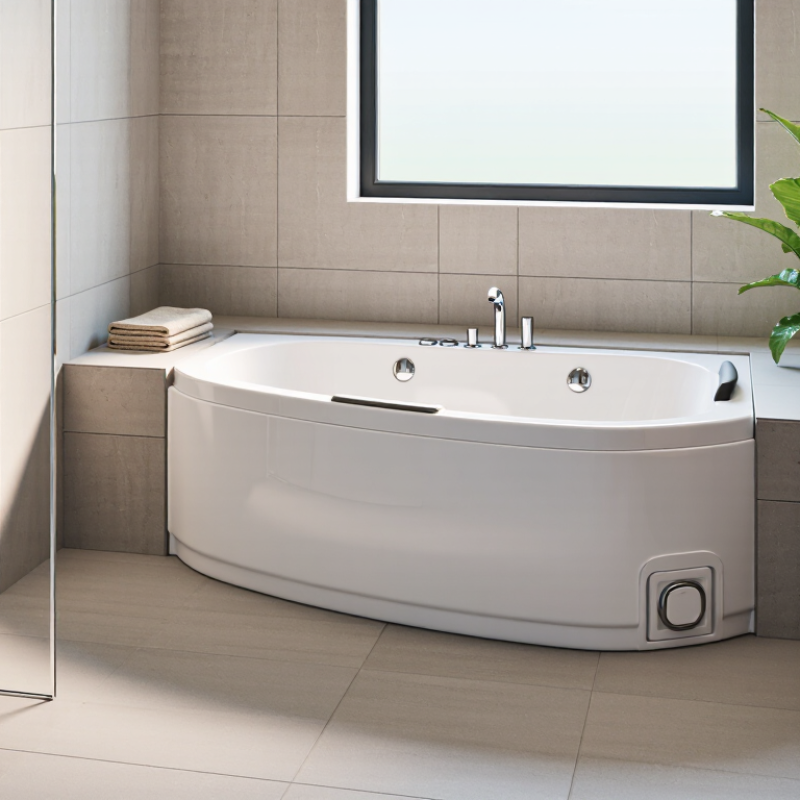
Compact configurations suit different bathrooms. An alcove model uses three walls and can fit a narrow layout. A corner bath may free up walking space, but its shape can reduce usable soaking room. A drop-in style offers flexible finishes, though the surrounding deck takes extra floor area. Check the filled weight and water capacity with a qualified installer. Small rooms have little margin for error.

Tips: Measure the doorway, route, and finished space. Measure twice. Sit in a similar-sized tub if possible; dimensions alone can be misleading. Confirm service access before choosing a configuration, and leave enough clearance to maintain the pump. Some plans look perfect on paper. Real bathrooms can be less forgiving.

How to Choose a Small Jacuzzi Bath in 2026? - Compare Compact Jacuzzi Bath Sizes and Configurations

Compare common compact whirlpool-bath formats. Dimensions are typical outside measurements; exact sizes, usable bathing space, and water capacity vary by model and installation.

Configuration Typical outside size (L × W) Bathing position Best suited to Planning considerations
Compact alcove, 4 ft About 48 × 30–32 in (122 × 76–81 cm) Usually one-person, reclined or semi-reclined Very tight bathrooms or replacement projects with limited wall length Shorter bathing well; check interior length and seat position, not just the exterior footprint.
Compact alcove, 4½ ft About 54 × 30–32 in (137 × 76–81 cm) One-person; commonly a molded seat or sloped back Bathrooms that need more bathing room than a 4 ft tub but cannot fit a standard 5 ft tub Confirm the rough opening, drain location, apron, and access panel requirements.
Standard alcove, 5 ft About 60 × 30–32 in (152 × 76–81 cm) One-person; left- or right-hand drain options are common A compact full-length tub for a typical three-wall alcove Often the easiest format to compare for replacement; verify the finished opening and plumbing position.
Compact drop-in About 54–60 × 30–36 in (137–152 × 76–91 cm) One-person; deck-mounted installation Bathrooms with a planned platform or tiled surround Allow space for the deck, pump, service access, and supporting structure; the finished footprint exceeds tub dimensions.
Small corner bath About 48 × 48 in (122 × 122 cm); shape varies Usually one-person; some designs offer a corner seat Rooms where a corner installation works better than a long alcove tub Check the diagonal reach, entry clearance, and whether the corner footprint obstructs nearby fixtures.
Compact freestanding About 55–60 × 27–31 in (140–152 × 69–79 cm) One-person; typically centered or offset drain Bathrooms prioritizing a freestanding look and open access around the tub Include clearance for cleaning and plumbing; confirm floor loading and pump service access.

Before choosing, measure the finished space, doorway and route into the bathroom. Check the installation manual for the tub’s exact dimensions, filled weight, electrical requirements, drain position, and required pump-access space.

Evaluate Jet Systems, Controls, and Accessibility Features

A small jetted bath needs to fit both the room and the person using it. Measure the bathing area, doorway, and route into the bathroom before comparing models. Then consider the jet system. Fewer, well-positioned jets may feel more comfortable than a crowded layout, but personal preference matters. If possible, sit in a similar tub and check whether the jets reach your back and legs without forcing an awkward posture.

Ask how the jets are operated and cleaned. Separate controls for water and air can offer a more tailored soak, while simple buttons may be easier to use with wet hands. Check that controls are within easy reach from a seated position. Also ask the installer or supplier how the system drains and what routine cleaning involves. Tiny details matter. A complicated cleaning routine can become tiresome, even when the bath feels relaxing.

Accessibility deserves the same attention as comfort. Look for a low step-over height, a stable grab point, and a slip-resistant floor. A built-in seat or wide ledge may help with transfers, but it can reduce space for stretching out. There is no perfect layout for everyone. I would not choose by jet count alone; try the controls and consider how entry and exit will work on an ordinary day.

Check Installation Requirements, Safety, and Maintenance

Before choosing a small whirlpool bath, measure more than the space where it will sit. Check the doorway, hallway turns, and route for carrying it into the bathroom. Leave room to open the access panel and reach the pump. A tub that fits on paper may still block a drawer or make repairs awkward. Check the filled weight, including bathers, against the floor’s capacity; ask a qualified building professional if you are unsure. Small details matter.

Plan electrical and plumbing work before ordering. A licensed electrician should confirm the required protected circuit and safe placement near water, following local rules and the tub’s instructions. Confirm drain location, water supply, and ventilation with the installer. Keep controls and non-waterproof outlets away from splash zones. Do not assume an existing bathroom circuit is suitable.

Maintenance is part of the choice. Ask how the jets and internal lines should be cleaned, and how often filters need attention. Follow the manufacturer’s care instructions, and use only compatible cleaners. Wipe the shell after bathing and check fittings for leaks. It can feel tedious. Yet skipping routine care may leave residue in places you cannot see, so consider whether the cleaning schedule fits your household.

Compare Total Costs, Warranties, and 2026 Product Standards

How to Choose a Small Jacuzzi Bath in 2026?

A compact whirlpool bath can fit a tight bathroom, but its purchase price rarely tells the whole story. Compare written, itemized quotes that include delivery, installation, plumbing changes, electrical work, and disposal of the old tub. Measure doorways and stair turns, not just the bathroom opening. A unit may fit the room and still fail to reach it. Check whether the floor needs extra support and whether the pump can be reached through a service panel. Those details can add cost later. Get them in writing.

Read warranty terms alongside the total cost. A shell, pump, controls, and labor may each have different coverage periods, exclusions, and claim procedures. Ask who handles repairs and whether approved installation is required. In 2026, verify that the model’s safety and efficiency documentation meets the requirements where you live; applicable standards can vary by location. Request current certificates and instructions, rather than relying on a sales description. Compare water use, pump noise, cleaning access, and replacement-part availability. Estimates are imperfect, especially before walls are opened. Leave room in the budget for surprises.