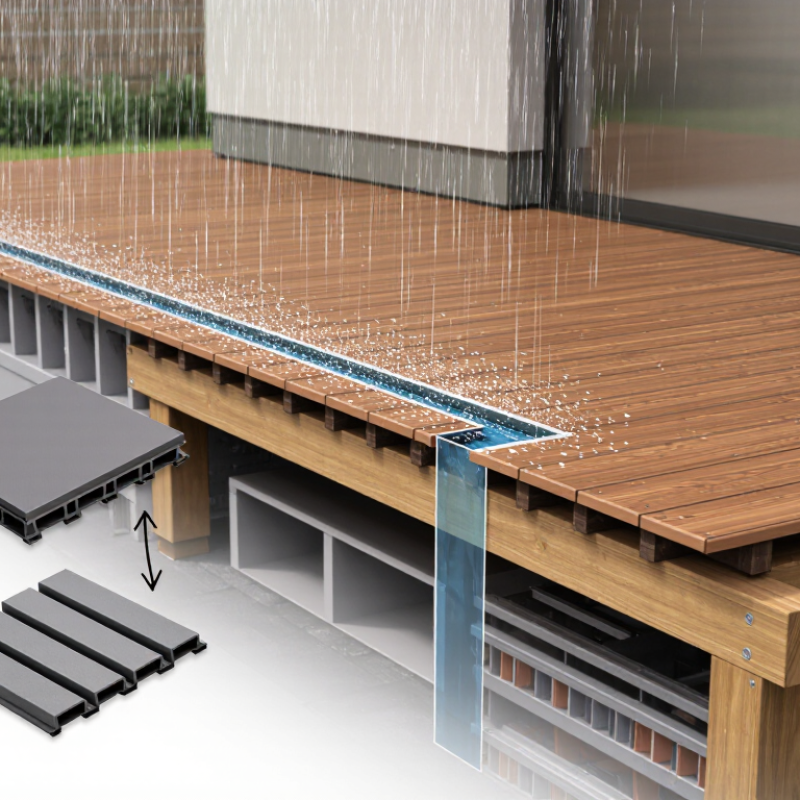
| Solid PVC decking | Boards are made from plastic and do not absorb water like wood. Board-level water resistance does not make the deck structure or joints watertight. | Often estimated at about 25–50 years, depending on product quality, installation, climate, and care. | Wash periodically with water and a suitable cleaner; inspect fasteners, gaps, and drainage. | Texture and surface temperature vary. Dark boards in direct sun can become hot; wet-surface traction depends on the board’s finish. | High | Projects where low board-level moisture absorption is the leading priority. |
| Capped composite decking | A protective polymer cap helps resist surface moisture and staining. The composite core is not necessarily waterproof if water reaches exposed edges, cuts, or damaged areas. | Commonly estimated at about 25–30 years, with actual performance affected by construction and exposure. | Routine washing; remove leaves and standing debris. Follow the manufacturer’s guidance for stains and snow removal. | Surface texture affects traction. Color, sun exposure, and airflow influence how warm boards feel underfoot. | Medium to high | Homeowners seeking a wood-like appearance with less routine upkeep than traditional lumber. |
| Uncapped composite decking | Wood-plastic composite can absorb some moisture, particularly at exposed ends and cut edges. It is generally less moisture resistant than capped composite or PVC. | Often estimated at about 10–25 years; maintenance, drainage, and local conditions matter. | Clean regularly and keep gaps clear so water can drain. Inspect for staining, swelling, or surface wear. | Traction and heat depend on surface texture, color, and exposure; performance varies by board design. | Medium | Projects where a composite appearance is desired and the deck can drain and dry effectively. |
| Naturally durable hardwood | Some dense hardwoods resist decay better than ordinary lumber, but they are not waterproof and can absorb moisture, weather, and develop surface checking. | Approximately 20–40 years is sometimes achievable with suitable species, installation, and maintenance; results vary widely. | Periodic cleaning and inspection. Optional finishes can help maintain color but require reapplication. | Texture, grain, and finish affect traction. Sun exposure can make boards hot, and weathering changes the surface over time. | High | Projects prioritizing a natural wood appearance and willing to allow for ongoing care. |
| Pressure-treated softwood | Preservative treatment helps protect against decay and insects, but the wood still absorbs water and can split, warp, or deteriorate if it stays wet. | Often about 10–20 years, depending on grade, ground contact, drainage, and maintenance. | Inspect regularly; clean and apply an appropriate water-repellent finish when needed. | Traction varies with board condition and finish. Wet, algae-covered, or worn surfaces can be slippery. | Low | Budget-conscious builds where regular inspection and maintenance are acceptable. |
| Aluminum decking | Metal boards do not absorb water or rot. The deck still needs suitable drainage, corrosion-compatible hardware, and properly detailed connections. | Often estimated at about 30–50 years or more, depending on coating, environment, and installation. | Usually limited to washing and inspection; check coatings, fasteners, and drainage channels. | Surface texture matters for wet traction. Sun-exposed surfaces can become hot, so compare samples and installation conditions. | High | Projects prioritizing rot resistance, durability, and low board-maintenance requirements. |


 Your message must be between 20-3,000 characters!