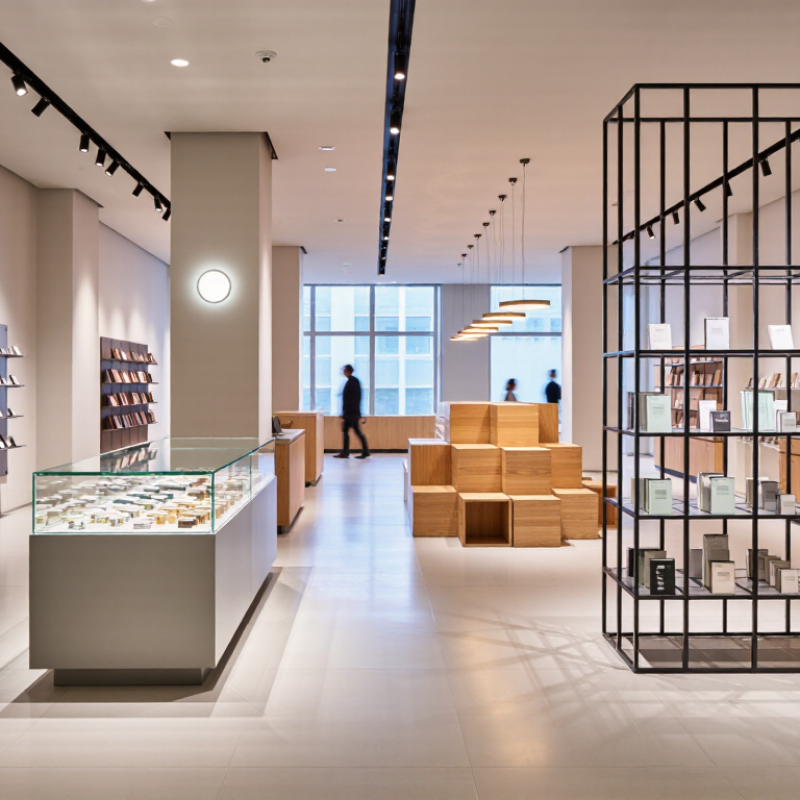
| Modular shelving | Packaged goods, homewares, books, and displays that change by season or product range. | Commonly metal, engineered wood, solid wood, or a combination of materials. | High
Many systems allow shelf positions or modules to be rearranged; compatibility depends on the system. | Check the stated load limit for each shelf and the complete unit. Confirm that the assembled shelving is level and secured as instructed. | Inspect joints and fixings periodically. Choose finishes that suit the expected cleaning routine and showroom environment. | Assess reconfiguration time, availability of compatible parts, shelf dimensions, finish options, and whether the unit can be expanded or reused. |
| Freestanding gondola shelving | Central floor displays, product categories, and layouts where shoppers need access from more than one side. | Typically a metal upright-and-shelf structure, sometimes with hooks, baskets, or interchangeable panels. | High
Accessories and shelf positions may be adjustable when designed for the specific unit. | Verify the rated capacity, base stability, and any anchoring requirements. Keep heavier items on lower shelves where practical. | Check for loose fittings, damaged edges, and worn finishes, especially in high-traffic areas. | Compare footprint, access from each side, accessory compatibility, sightlines, and how easily the layout can be changed. |
| Countertop display stand | Small products, samples, promotional items, and point-of-sale merchandising. | May use acrylic, card, metal, wood, or molded plastic, depending on the intended product and setting. | Medium
Often easy to move, though layouts and capacity are limited by the stand’s size. | Check that the base sits securely on the counter and that the stand is appropriate for the weight and shape of the products. | Consider fingerprints, scratches, dust, and whether the material can be cleaned with the products already used on site. | Compare counter footprint, visibility at shopper eye level, refill access, durability, and whether signs or product information can be updated. |
| Garment rail or clothing stand | Apparel, uniforms, and collections that need to be viewed on hangers. | Commonly constructed from tubular metal, with fixed or wheeled bases and one or more hanging rails. | Medium
Some models are height-adjustable, foldable, or mobile; features vary by design. | Check the stated load limit, wheel locks where fitted, base width, and resistance to tipping when garments are unevenly distributed. | Inspect wheels, locks, joints, and rail surfaces. Avoid exceeding the stated capacity. | Compare rail length and height, mobility, storage needs, garment access, and whether the stand fits the available aisle width. |
| Glass display cabinet | Fragile, valuable, collectible, or dust-sensitive products that benefit from a more enclosed presentation. | Usually combines glass panels with a metal, wood, or composite frame; some designs include locks or lighting. | Low to medium
Internal shelves may be adjustable, but moving the cabinet itself can be difficult. | Confirm the shelf and cabinet load ratings, stable placement, appropriate glass construction, and safe access for installation and cleaning. | Glass needs regular cleaning; check hinges, locks, seals, and lighting components where present. | Assess visibility, glare, access control, cleaning effort, lighting serviceability, and how the cabinet’s dimensions affect traffic flow. |
| Pegboard or slatwall display | Tools, accessories, packaged products, and assortments displayed on hooks, shelves, or brackets. | Panels may be made from engineered wood, metal, or other panel materials, with compatible display fittings. | High
Hooks and shelves can often be repositioned, provided they match the panel system and load requirements. | Check panel and fitting capacity, wall or frame attachment, and the effect of load distribution across the panel. | Inspect panel surfaces and fittings for wear. Keep compatible replacement hooks and brackets available if the assortment changes. | Compare panel dimensions, fitting availability, weight limits, ease of remerchandising, and whether the display works as a wall or freestanding unit. |
| Digital-integrated display stand | Product demonstrations, interactive information, digital menus, or displays that combine physical products with screen content. | May combine a metal or wood structure with a screen, media player, power components, and cable management. | Medium
Content can be updated digitally, while physical repositioning depends on the stand’s construction and connections. | Check screen mounting, cable routing, ventilation, power requirements, and the stability of the complete assembled unit. | Plan for screen cleaning, software or content updates, power access, and maintenance of electronic components. | Compare screen size and viewing angle, content update process, connectivity, service access, energy needs, and physical product visibility. |


 Your message must be between 20-3,000 characters!