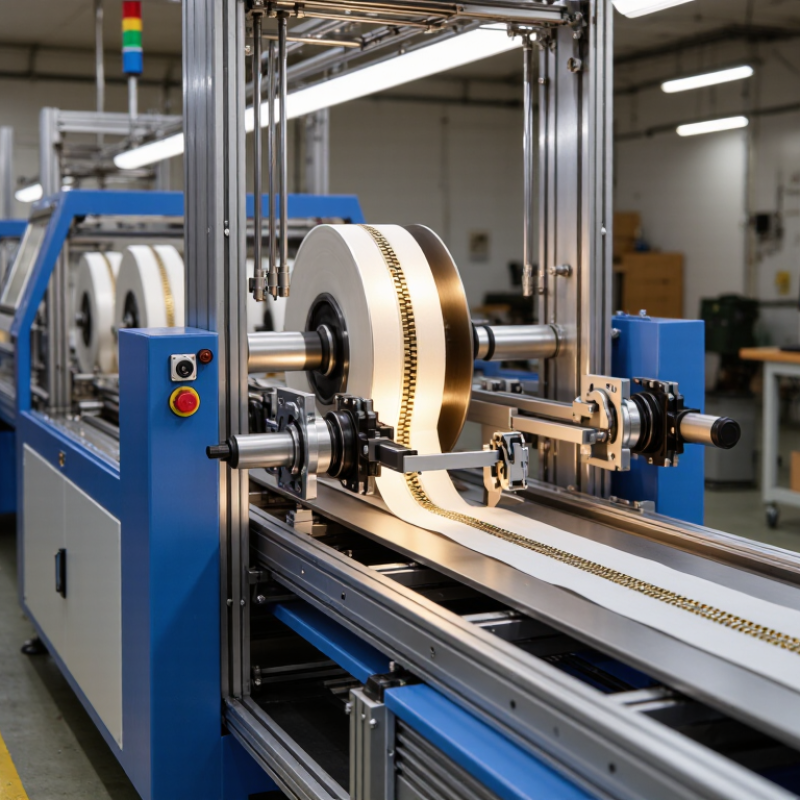
| 1 | Zipper Feeding | Continuous zipper chain or pre-cut zipper sections | The feeder unwinds, aligns, and advances the zipper using rollers, guides, or a servo-driven feed system. | A correctly positioned zipper reaches the processing zone. | Confirm smooth feeding, correct orientation, and no chain overlap. |
| 2 | Length Detection | Zipper chain with a programmed finished length | An encoder, sensor, or mechanical stop measures the feed length. The target is commonly set in millimeters according to the product specification. | Each zipper section is prepared to a consistent length. | Measure sample lengths and verify tolerance against the work order. |
| 3 | Positioning and Alignment | Measured zipper section and reference marks | Side guides and clamps center the zipper tape, teeth, slider, or end components before cutting or assembly. | The zipper is held in a repeatable position for the next operation. | Check tape alignment, tooth direction, and component position. |
| 4 | Cutting or Separation | Continuous zipper chain or prepared zipper tape | A pneumatic, servo, or mechanical cutting unit separates the programmed length. Cutting force and timing are adjusted for the zipper material. | Individual zipper sections are produced without excessive fraying or tooth damage. | Inspect cut edges, tape integrity, and separation accuracy. |
| 5 | Component Assembly | Sliders, top stops, bottom stops, pins, boxes, or other specified parts | Feeding bowls, rails, or pick-and-place mechanisms deliver components. Pressing or insertion force is controlled according to the component type. | The required zipper hardware is attached in the correct sequence. | Verify component presence, orientation, and firm attachment. |
| 6 | Pressing and Forming | Zipper section with attached hardware | A forming or pressing station applies controlled pressure to secure stops or shape the assembly. Pressure and dwell time are adjusted during setup. | Hardware is fixed securely without crushing the tape or damaging the teeth. | Test attachment strength and inspect for deformation. |
| 7 | Functional Test | Assembled zipper section | The slider may be moved through a defined portion of the chain, or sensors may confirm component position and product presence. | Zippers with incorrect assembly or blocked movement are identified. | Check slider movement, tooth engagement, and stop security. |
| 8 | Automatic Rejection | Inspected zipper products | Sensors or programmed inspection logic activate a reject mechanism when length, position, component, or movement criteria are not met. | Nonconforming pieces are separated from acceptable products. | Confirm that rejected and accepted pieces are routed correctly. |
| 9 | Counting and Collection | Qualified finished zipper pieces | A counter records production quantity. A chute, conveyor, tray, or collection box receives the finished pieces. | Finished products are counted and organized for packing or the next process. | Compare the machine count with a manual sample count. |
| 10 | Production Rate | Configured zipper style, length, and assembly sequence | Typical automatic production is approximately 20–60 pieces per minute. Actual speed depends on zipper type, length, number of operations, feeding stability, and inspection requirements. | Stable, repeatable production at the selected operating speed. | Record output rate, stoppages, rejection rate, and cycle consistency. |


 Your message must be between 20-3,000 characters!